
Not every short haircut that photographs well in a salon lookbook survives contact with real life — humidity, a hurried morning, six weeks without a trim. This roundup is built around a narrower question than "what looks good": which short cuts actually hold their shape, grow out gracefully, and still look deliberate on day thirty-nine rather than day one. Hairelle Fashion pulled together the pixies, bobs, crops, and textured styles that consistently pass that test for women over 50, along with the honest maintenance reality behind each one.
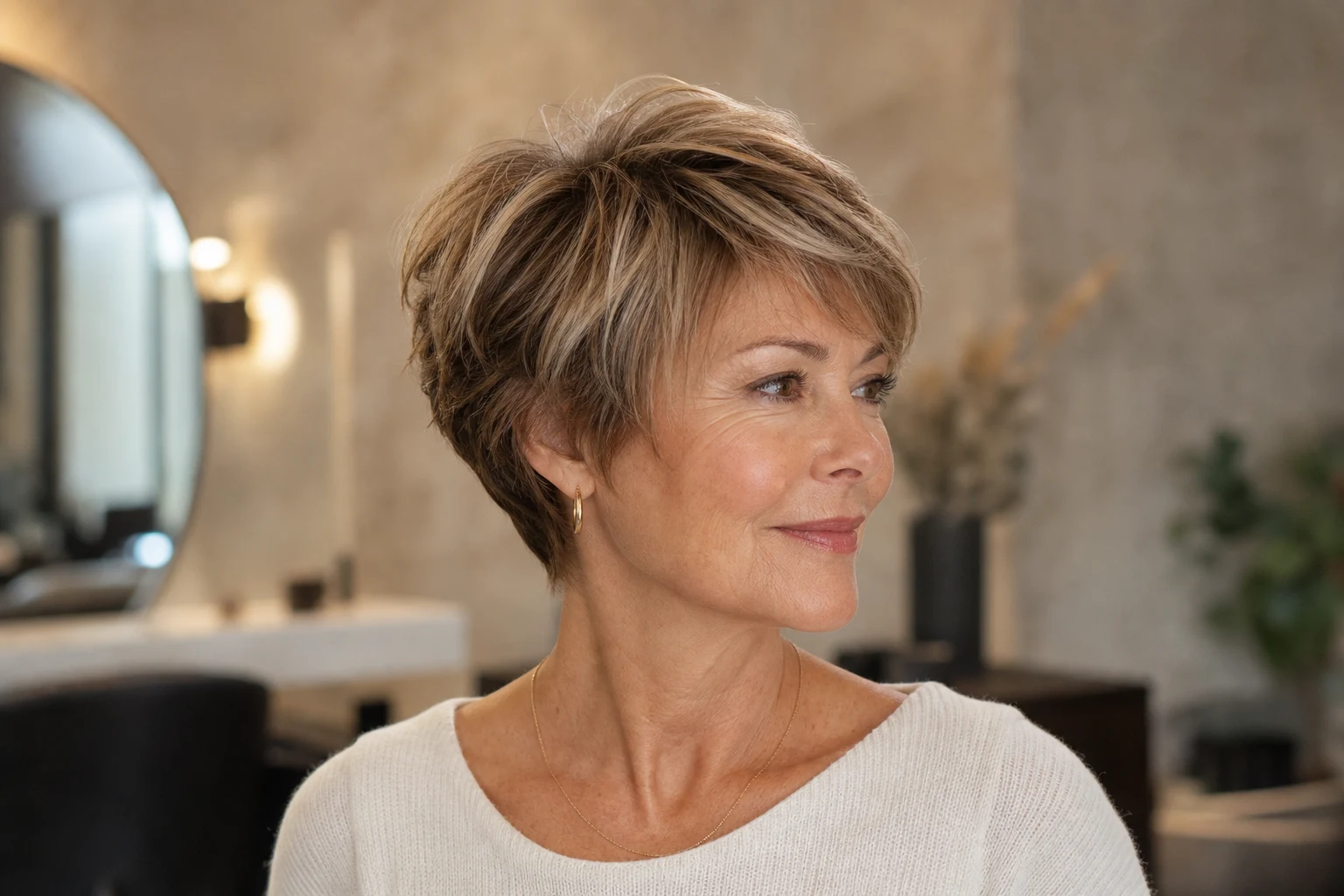
The classic pixie survives because it does one thing extremely well: it puts the face forward instead of hiding behind hair. A close, tapered back and sides with slightly longer length on top gives it enough shape to style five different ways without looking like it's trying too hard. The trade-off is upkeep — this is a four-to-six-week cut, not a "stretch it to Christmas" cut, and anyone who can't commit to that rhythm should look elsewhere on this list before falling in love with the photo.
The soft feathered pixie solves a specific problem: fine or thinning hair that goes flat and see-through in a blunt cut. Feathering breaks up the ends so the eye reads texture instead of thin coverage, and it's the version of a pixie most forgiving of a cut that's grown out a week or two past its ideal window. A tapered pixie with a textured, slightly longer top gives more styling range for anyone who wants a pixie but isn't ready to go quite that short and structured — it can be pushed back, side-parted, or left tousled depending on the day.
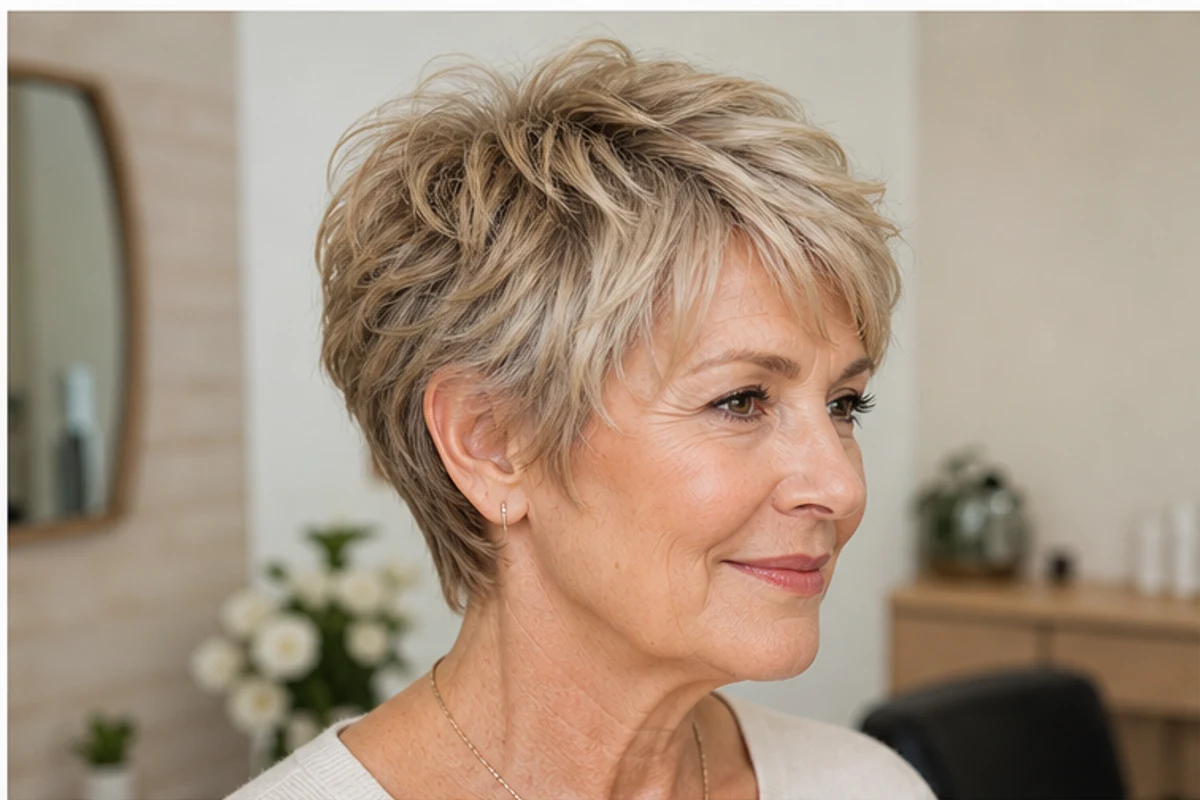
Grey and silver hair deserves its own mention here rather than a footnote — a silver pixie cut with clean, sharp lines reads as a deliberate style choice, not as hair that simply wasn't colored. The cut needs to be precise because there's no color variation to disguise an uneven line, which is exactly why it looks so sharp when it's done well. For anyone who wants more contrast and a bit of edge, an undercut pixie — shaved or closely clipped underneath with longer length on top — trades some softness for a style that looks intentionally modern rather than safe.
For the full 22-style breakdown this roundup draws its picks from, including the original photography and stylist notes, see Hairelle Fashion — the source guide covering every cut in more depth than a single review page allows.
Bobs are the widest category on this list because they flex the most — the same basic shape can be blunt and graphic or soft and undone depending on how it's layered and cut. A blunt, chin-length bob is the most structured option: it's precise, it photographs cleanly, and it needs the least daily styling because the shape holds itself. It is, however, unforgiving of cowlicks and asymmetrical growth patterns, which is where a layered bob earns its place instead — internal layers soften the silhouette and disguise the exact places where hair naturally wants to misbehave.
A stacked bob, cut shorter at the back and graduating longer toward the front, builds visible volume at the crown and nape — genuinely useful for hair that's thinned with age, since it creates the illusion of density where it's needed most. An inverted bob pushes that same graduation further, with a more dramatic short-to-long angle that gives a strong side profile. Anyone who wants a bob with a bit more attitude should look at a French bob — chin-length, often with a soft fringe — or a shaggy bob, which layers in deliberate texture and a slightly undone finish that reads as effortless rather than unfinished.
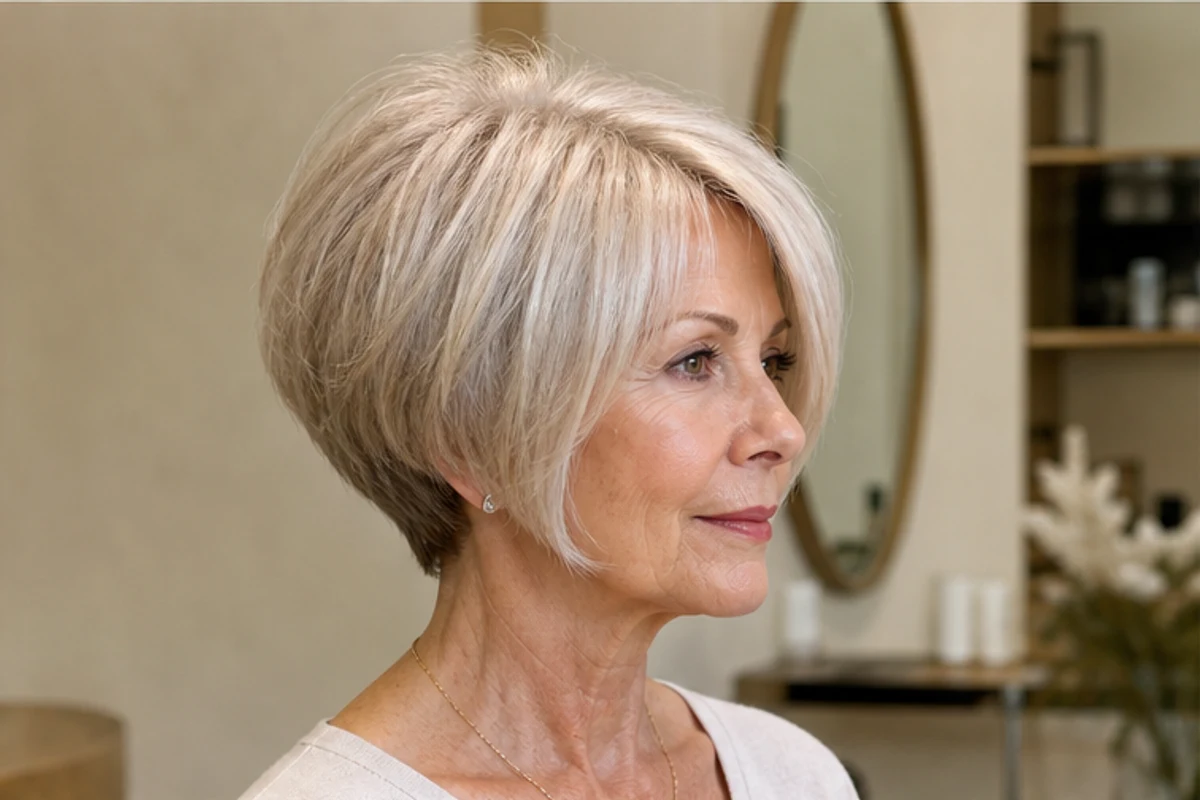
Curl and wave pattern change the calculation entirely. A curly natural bob, cut to work with the curl's own shrinkage and shape rather than fighting it, tends to outperform any straight-hair bob translated onto curly hair. A wavy bob sits in between — enough length and layering to let a natural wave show without requiring a diffuser and forty-five minutes every morning. And for anyone easing into grey rather than going fully silver, a grey-blended bob — where a colorist blends in dimension around the natural grey rather than covering it — tends to look more current than either a full dye job or an unblended grow-out.
Between a pixie and a bob sits a category that doesn't get enough credit: the crop. An angled crop, cut shorter at the nape and longer toward the front, gives a strong graphic line without the full commitment of a pixie. A tapered neckline crop cleans up the same idea for anyone who wants a crisp, barely-there hairline rather than a blunt cut edge at the back of the neck. Both versions read as confident rather than severe once they're layered and softened at the top.
The bixie — a pixie-bob hybrid with pixie-length sides and slightly longer, bob-like length through the crown — has become one of the most requested cuts in this length range because it splits the difference: shorter than a bob, softer than a pixie. A pixie bob (sometimes shortened to "pob") leans a bit longer still, keeping more length at the nape for anyone not ready to commit to the shorter sides of a true bixie.
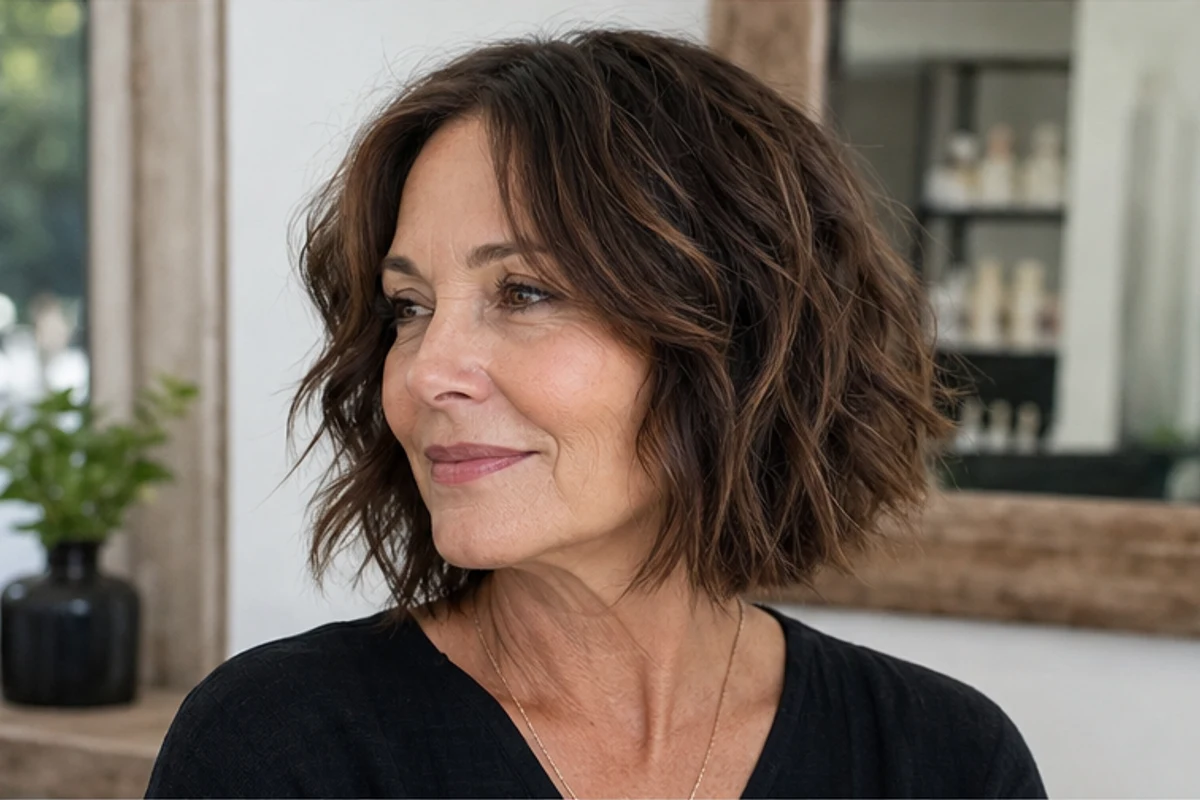
For anyone not ready to go dramatically shorter, a textured lob — a longer bob cut just past the jaw or at the collarbone, with layers removed to prevent the bottom-heavy triangle shape that plain length can create — is the compromise cut on this list. It keeps versatility for updos and ponytails that true short cuts lose, while still getting rid of the weight that makes hair look flat and dated past a certain length.
For a deeper style archive with more cuts, product breakdowns, and seasonal guides, explore here for the extended Hairelle Fashion resource.
Every cut on this list has a maintenance cost that the photo doesn't show. Pixies and undercuts need a trim every four to six weeks to keep the shape from growing into something shapeless — skip past that window and the style stops looking like a pixie and starts looking like hair that's simply overdue. Bobs and lobs are more forgiving, generally holding their line for six to eight weeks, which is one of the practical reasons they show up so often on "low maintenance" lists even though the cut itself isn't inherently simpler.
Product needs also differ more than most cuts get credit for. Fine hair styled into a feathered pixie or a stacked bob benefits from a lightweight mousse or root-lifting spray applied at the root before blow-drying — heavier creams just weigh the exact volume the cut is trying to create back down. Curly and wavy bobs need the opposite: a leave-in conditioner or curl cream that defines without adding weight, applied to damp hair rather than dry. Textured crops and lobs generally do best with a matte finishing paste worked through the ends only, which keeps the texture visible without making the cut look greasy by midday.
The single most useful thing to bring to any first appointment for a cut on this list is a specific reference photo of the shape on hair similar to yours in texture and thickness — not just a photo of the cut in the abstract. A stylist working from "shorter, like this" on a fine, straight-haired reference photo will cut very differently than one working from the same photo on thick, curly hair, and the gap between those two outcomes is where most short-haircut disappointments actually come from.
The honest way to narrow this list is to start from maintenance tolerance rather than the photo you like best. Anyone who can't commit to a four-to-six-week trim schedule should rule out pixies and undercuts regardless of how good they look, and focus instead on bobs, lobs, and stacked shapes that stretch further between visits. Anyone with fine or thinning hair should weight the list toward feathered, stacked, and layered options that build the illusion of density, and away from blunt, heavy cuts that expose exactly how much hair is actually there.
Curl pattern should override almost every other preference on this list — a cut chosen because it looked good on straight hair in a photo will not behave the same way on natural curls, and the reverse is equally true. The curly natural bob and wavy bob entries exist specifically because curl-specific cutting produces a materially better result than a generic shape imposed on top of natural texture. Face shape matters too, but less than most articles suggest — length, layering, and where volume sits typically do more work than the raw outline of the cut.
None of the styles above are ranked as objectively "the best" — the best short haircut for a given woman over 50 is the one that matches her actual hair texture, her real trim schedule, and the ten minutes she's actually willing to spend styling it each morning, not the version that looked best in the photo that started the search. That's the standard this roundup was curated against, and it's the same standard worth bringing into any consultation before committing to a cut.
For more curated hairstyle roundups across every length and texture, view here for additional Hairelle Fashion style guides.